In my most recent project on Serbia’s Productivity and Wage Dynamics, I analyzed the long-term relationship between real wages and labor productivity, demonstrating that despite periods of wage growth, Serbian workers continue to receive a declining share of the value they produce. Earlier this month, I presented these findings at a mainstream economics conference in Armenia. To my surprise, I did not encounter the usual pushback grounded in the mainstream assumption that when wages grow faster than productivity, workers are somehow receiving more than they “deserve.” That very assumption—so often used to discredit wage gains—was one of the initial triggers for my interest in this subject.
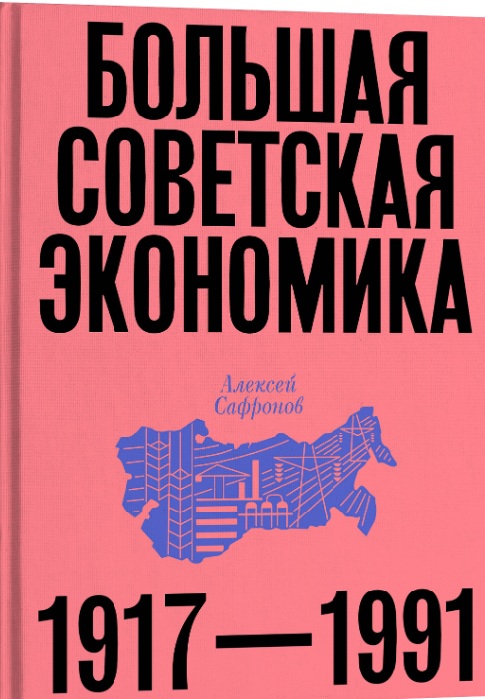
That’s why I was genuinely taken aback to come across the exact same argument—word for word—in The Great Soviet Economy, a newly published book by Alexey Safronov, a young Russian economist who openly identifies as a sympathizer of the socialist project. Reflecting on wage dynamics under Khrushchev’s reforms in the 1950s, Safronov notes that while the Fifth Five-Year Plan anticipated a 35% increase in wages, actual growth reached 39%, compared to a 33% rise in industrial productivity. His conclusion? That “workers started getting a salary they didn’t earn.”
But this logic only holds if one assumes that wages and productivity were exactly aligned to begin with—a condition that rarely holds in any economy, and certainly not in the Soviet Union. Imagine a situation where the average productivity per worker was $100 and wages were $80. If productivity then grows by 33% and wages by 39%, the new productivity level becomes $133 and wages rise to $111.20. Despite the faster growth in wages, the absolute gap between what workers produce and what they receive has actually widened—from $20 to $21.80. In relative terms, workers are getting a slightly larger share of what they produce, but they are still not receiving the full value of their labor.
In the Soviet context, this gap was not surplus value in the capitalist sense—since there were no private capitalists appropriating profits—but it did represent what Paul Baran and Paul Sweezy called the surplus product: the portion of output above what is necessary to sustain the working population at its prevailing standard of living. In their classic work Monopoly Capital, Baran and Sweezy emphasized that the surplus product is a universal category applicable to all class societies, including bureaucratic collectivist systems like the Soviet Union. There, the surplus was not accumulated by capitalists but appropriated and managed by the state—allocated to investment, defense, heavy industry, or the consumption of the administrative elite.
A modest increase in wages relative to productivity growth, therefore, does not imply overpayment. It simply reflects a partial redistribution of the surplus product within a system still structured around hierarchical control over the economic plan—even if that control was not exercised through private property and profit.
This distinction is clearly borne out in my research on Serbia’s wage–productivity dynamics. Between 2007 and 2023, average labor productivity in the Serbian business sector increased by more than 75%, while real net wages rose by just under 60%. In other words, wages not only lagged behind productivity—they were consistently and significantly below it throughout the period. Even in the few years when real wages grew faster than productivity—such as 2010 and 2020—this did not eliminate the wage–productivity gap but merely slowed its widening. In both absolute and relative terms, the share of value retained by labor has remained structurally low.
To give a concrete example: in the manufacturing sector, one of Serbia’s most productive industries, real value added per worker in 2023 was approximately 1.9 million RSD, while average annual net wages were just under 900,000 RSD—less than half of what each worker produced. Similarly, in the information and communication sector—often cited as a driver of Serbia’s digital transition—value added per employee exceeded 4 million RSD, yet average wages hovered around 1.8 million RSD. These figures expose the persistence of a large and growing gap between what workers contribute and what they receive, confirming that even when wages grow more rapidly in a given year, there is no automatic overcompensation. The system continues to extract and redistribute a substantial surplus—whether in capitalist or state-directed form.
These figures expose the persistence of a large and growing gap between what workers contribute and what they receive, confirming that even when wages grow more rapidly in a given year, there is no automatic overcompensation.
This point is clearly illustrated in the chart below, which shows the average difference between the logarithm of productivity and the logarithm of wages across major sectors in Serbia. In every sector, the gap is negative—indicating that labor’s share remains structurally below its contribution. Even in high-performing sectors such as Information & Communication, the wage–productivity divide is stark.

Seen in this light, Safronov’s conclusion reflects a misunderstanding of the nature of wage–productivity dynamics. From a Marxist perspective—which Safronov presumably respects, at least methodologically—the central issue is not the relative rates of change but the structural gap between labor’s contribution to value and what it receives in return. This gap, as my research on Serbia shows, can persist—and even widen—despite faster wage growth in specific periods or sectors.
Nor is Safronov’s comment unique. Similar allegations are frequently made in Serbia, where the dominant narrative holds that excessive wage growth destabilizes the economy by boosting imports and undermining competitiveness. These arguments, like Safronov’s, rely on the assumption that any wage gain not strictly matched by productivity is unjustified—ignoring the deeper question of how much value labor creates and how that value is distributed.
The same logic applies to the Soviet context: a brief episode in which wages outpaced productivity does not automatically imply that workers were overcompensated. It merely reflects a momentary shift in the distribution of a surplus product that still existed and was still appropriated—not by private capitalists, but by the state apparatus and its planning priorities. To frame this episode as a case of workers “getting a salary they didn’t earn” is to adopt a narrow, rate-of-change logic that misses the deeper Marxist insight into how surplus is produced and distributed, even in non-capitalist societies. Even in the Soviet Union, where capitalist property relations had formally been abolished, a surplus product clearly existed. It was appropriated not by private capital, but by the state—either reinvested, used for defense, or consumed by an expanding bureaucratic stratum. The wage–productivity gap was thus not eliminated, only differently administered.
In this context, Khrushchev’s policies must be understood not as technical errors but as part of a broader attempt to rebalance the social contract. Following Stalin’s death, there was growing pressure to raise living standards, improve housing, and expand access to consumer goods. Slightly faster wage growth may well have been a deliberate move to ease worker discontent and re-legitimize the post-Stalin order—not an inadvertent drift into “unearned income.”
Ironically, a critique meant to highlight a distortion under socialism ends up reinforcing a normative assumption common to capitalist ideology—that workers must always justify their wages through proportionate productivity, as if surplus value and its distribution did not exist. For a self-professed socialist, this is a curious and revealing conclusion.
That said, this criticism should not detract from what is, so far, a rich, accessible, and impressively well-written economic history of the Soviet Union. I am currently halfway through The Great Soviet Economy, and what I’ve read has been consistently engaging and thought-provoking. The book vividly shows how the original hopes of the Bolsheviks to create a society based on associations of free producers were gradually derailed—under pressure from both internal crises (the devastation of World War I, civil war, and resistance from the domestic bourgeoisie) and external threats (foreign intervention, economic blockade, and isolation). One of the most compelling aspects of the book is its account of the early Soviet period, when both economic theory and practice—like Soviet social thought more broadly—were marked by remarkable openness, intellectual vibrancy, and a willingness to experiment. Competing visions were debated fiercely, and theory, no matter how authoritative, was subjected to critical scrutiny and discarded when it failed to deliver results. One approach would give way to another as conditions evolved, reflecting an admirable pragmatism often forgotten in later decades.
Safronov’s retelling of the economic debates of the 1920s is particularly fascinating, as is his effort to explain the functioning of the Stalin-era economy with clarity and nuance. I look forward to reading the concluding chapters, where he turns to the collapse of the Soviet economy and offers his explanation for the failure of this ambitious social experiment. Was socialism itself unviable in principle, or was it the Soviet model—with its specific institutional path and administrative distortions, later modified in other socialist countries—that ultimately proved unsustainable? Alec Nove, a recognized authority on socialist economics (whom Safronov cites at the beginning of the book), argued that socialism was feasible—though only under certain conditions. Many of these themes are also discussed in Safronov’s educational video series Plan A (in Russian) on the YouTube channel Prostye Chisla (link here). There is much to be found—and much to reflect on—in this important book.