Reading Brezhnev Through Mitrokhin’s Lens
Introduction: Was It Really a Planned Economy?
Winter holidays are supposed to be for rest. Naturally, many of us use them to do unpaid intellectual labor instead: catching up on the reading list we’ve been ignoring all year.
This time my holiday indulgence was a wonderfully detailed (and, yes, genuinely delicious) book: Mitrokhin’s Essays on Soviet Economic Policy in 1965–1989 published in Russian in 2023. Mitrokhin’s central claim is blunt. The Soviet economy, he argues, was anything but “planned” in the way Soviet ideology pretended it was. Initial plan targets were negotiated, re-negotiated, adjusted, postponed, re-labeled, and quietly rewritten so many times during implementation, and resources were diverted so routinely, that the celebrated “law of planned and balanced development under socialism” invented by Soviet economists turns into a rhetorical ornament, not an operating principle.
Mitrokhin, of course, is not the first to say this. Long before perestroika made such language respectable, Eugène Zaleski had already documented, in excruciating empirical detail, how Soviet “plans” were routinely bargained over, adjusted, and politically reinterpreted in the course of implementation. In his 1980 study of Stalinist planning, he shows that even in the high-command era the long- and medium-term plans often functioned less as binding technical programs and more as mobilizational declarations, continuously corrected as bottlenecks, lobbying by ministries, and administrative crises reshaped what was actually feasible.
By the 1980s, a later generation of Soviet economists and reform advisors was openly diagnosing these deficiencies from inside the system. Figures such as Abel Aganbegyan, Leonid Abalkin, Nikolai Petrakov, Stanislav Shatalin, and Grigory Yavlinsky (all mentioned by Mitrokhin) were, in different ways, pointing to the same underlying problem: the administrative-command model produced rigidity, bargaining games, and chronic coordination failures that no amount of “fine-tuning” could fully fix.
To make the point, Mitrokhin quotes Mikhail Gorbachev, who once described the time-consuming, bureaucratic, and labyrinthine decision-making process of a highly centralized command economy and then asked, rhetorically: can such a system truly be called planned? The question lands because anyone who has worked inside a large hierarchy recognizes the vibe: the system is “centralized,” but the center is drowning in paper, and the periphery survives by improvisation.
Still, I’m not fully convinced by Mitrokhin’s conclusion. Frequent revisions, bargaining, and mid-course corrections do not automatically make an economy “unplanned.” They can also indicate something else: planning as a political-administrative process, not an engineering blueprint. Plans in the real world often function less like sacred tablets and more like contested commitments, continuously reconciled with constraints, bottlenecks, and shifting priorities. If anything, the constant renegotiation may reveal how planning actually worked, rather than proving it didn’t exist. And in any case, whatever else one says about Soviet planning, it did at least manage to avoid the classic capitalist crises of overproduction. The system’s pathology was almost the opposite: a chronic shortage economy, in Kornai’s sense, where scarcity, queues, and soft constraints were structural features rather than temporary “imbalances”.
Brezhnev’s Blueprint Mix-Up
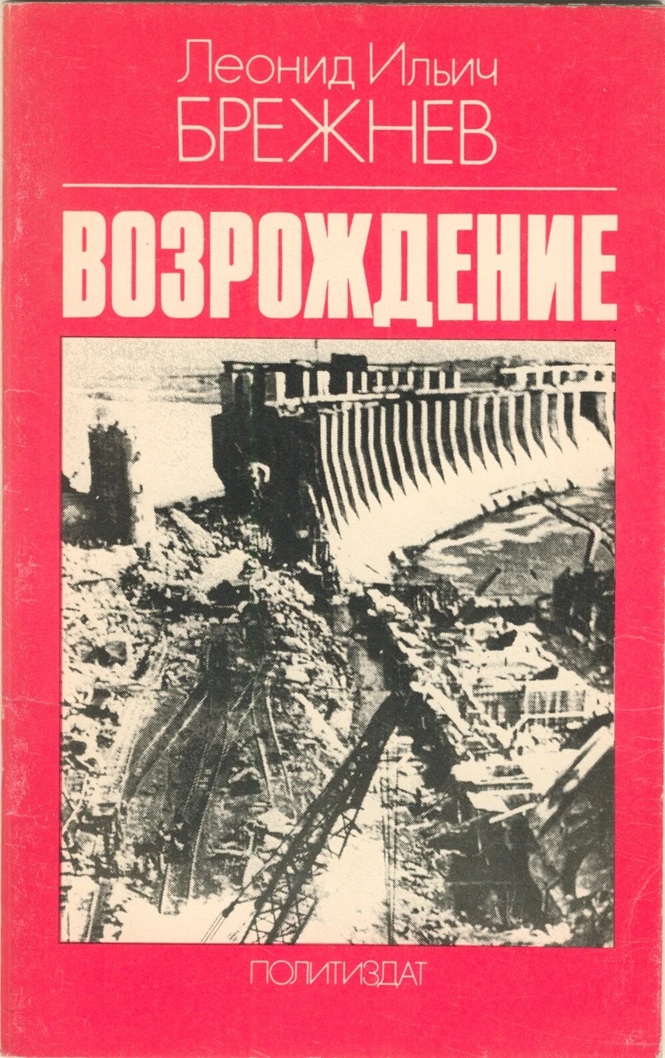
To think this through, I turned from Mitrokhin to an unlikely supporting character: Leonid Brezhnev, and his now mostly forgotten memoir Возрождение (Rebirth), where he describes post–World War II reconstruction of the giant steelworks Zaporizhstal in southeastern Ukraine. In one passage, Brezhnev tells a small story in an amused, almost affectionate tone. A blueprint arrives with a categorical resolution scribbled on it: “Emergency! Do it today. Livshits.” The installation crew looks at the drawing and panics. By the strictest norms, it’s three days of work. There is, as Brezhnev delicately hints, some “strong language,” but there’s no escaping an “emergency” order. They pile in, reorganize sensibly, work по-умному (in a smart way), and somehow complete the whole installation the same day.
Then a young woman from the design bureau runs in: “Where’s the drawing?” And the punchline arrives: the resolution by Comrade Livshits, head of the energy sector at Gipromez, wasn’t addressed to the installers at all. He meant: make a copy of the blueprint today. Not build anything. Just copy the paper.
So here’s the question that matters, and it’s bigger than the joke. If a supposedly “planned” economy can mobilize resources and human effort so fast that three days of work becomes one, yet can also misfire so badly that a copying request triggers a production sprint, what exactly does that say about Soviet planning? Was it a system of rational coordination, or a system of hierarchical signals and defensive improvisation? And if “emergency” stamps can reallocate labor instantly, what does that imply about how priorities were set, how information moved, and why everyday productivity looked so different from crisis productivity?
Five Vignettes from One Scribble
That small episode is where we start. We can translate it into a short checklist of systemic traits, developed below in five vignettes. The first is the key coordination mechanism in a shortage economy: administrative priority allocation.
- Administrative priorities and hierarchical dispatch
Administrative priority allocation is what you get when scarcity persists but neither prices nor contract discipline are allowed to do the coordinating. In Brezhnev’s anecdote, the key allocation device is not a timetable or a procurement schedule but a scribble on a blueprint: “Emergency! Today.” That mark functions like a command-economy substitute for a price spike, instantly pushing a task to the front of the queue and reallocating labor and attention on the spot. The deeper issue is that the stamp doesn’t just reprioritize work; it replaces scheduling itself. Instead of a transparent workflow that assigns labor, machinery, and inputs through predictable routines, coordination happens through ad hoc interventions: written resolutions on documents, urgent phone calls, “instructions” passed down the line, and the assignment of “personal responsibility” to someone who can’t afford to fail. The hierarchy becomes the dispatcher, constantly rerouting tasks as bottlenecks appear, priorities shift, or someone powerful becomes impatient.
- Crude signals, expensive dialogue
Mitrokhin describes the broader version of this under “voluntarism”: resources shift not because an efficiency criterion identifies the highest-return use, but because political and administrative considerations define what is “important” right now, whether prestige, ministerial lobbying, fear of blame, or a leader’s priority. In that setting, “urgent” stamps tend to inflate, queue-jumping becomes routine, and initiative turns defensive: people optimize for compliance and safety rather than cost minimization. The result is a planning system whose real operating logic is a moving hierarchy of priorities, with authority doing the work that prices and schedules do elsewhere, fast and forceful when it works, jittery and opaque when it misfires.
The second trait is informational, but not in the abstract “Gosplan can’t compute the economy” sense. It’s about the everyday micro-politics of information exchange between the center (managers, engineers, sector heads) and the executors. In theory, the installers could have clarified a two-word instruction: urgent what, exactly? In practice, they don’t, and that tells us a lot. Hayek’s old point about dispersed, local knowledge applies here at the smallest scale: the people who actually see the concrete situation are rarely the ones who issue the command, and transmitting that knowledge upward is neither frictionless nor safe. And as Herbert Simon emphasized in his work on organizations, real bureaucracies operate under bounded rationality: they simplify, rely on routines, and use crude cues because fully informed, fully rational coordination is impossible.
Information has a cost in any bureaucracy, but in a command hierarchy it also has a risk profile. Asking for clarification can mean delay, irritation, exposure of “incompetence,” or, worse, being interpreted as resistance. So the safest move is often to assume the most demanding interpretation and get on with it. That is why crude signals like “urgent,” “special control,” or “personally responsible” become so powerful: they’re easy to issue from above, but costly to query from below. And this behavior is reinforced by habit. If “drop everything and do this today” is routine, then workers stop treating it as a true exception and start treating it as the normal operating mode. The anecdote captures that learned response: no one verifies the meaning of the signal because experience has taught them that signals are not invitations to dialogue. They are commands that trigger storming.
- Storming as the normal mode
Storming (штурмовщина) is the Soviet economy’s signature “two-speed gearbox”: long stretches of waiting, improvisation, and half-paralysis punctuated by sudden, exhausting bursts of hyper-activity when a deadline, inspection, or “urgent” order hits. In Brezhnev’s anecdote, the crew doesn’t just work hard, they flip into emergency mode and compress three days into one. That’s not an exception; it’s an institutional rhythm in a shortage system with rigid plans and unreliable inputs. What makes it especially revealing is that storming was not merely tolerated. It was often celebrated.
Soviet “production” fiction and socialist realist narratives repeatedly present the last-minute surge as moral triumph: the collective pulls together, obstacles are overcome, the plan is “fulfilled,” the hero-organizer finds the decisive lever, and the factory becomes a stage for political character. Fyodor Gladkov’s Cement is a classic example of this aesthetic: industrial reconstruction is framed as a heroic campaign where extraordinary mobilization substitutes for ordinary coordination. The ideological message is uplifting; the economic implication is grimly practical: if the system needs heroics to achieve routine outputs, then routine coordination is broken by design. Storming delivers visible results and protects reputations in the short run, but it also normalizes waste, fatigue, quality problems, and the hoarding of “smart” methods for moments when someone has slapped an “urgent” label on a piece of paper.
- Hidden slack as survival
Defensive behavior and hidden slack are the quieter twin of storming. If storming is the visible sprint, slack is the invisible pacing strategy that makes the sprint survivable. The Soviet shop floor was full of “unutilized capacity” not because people lacked skill, but because initiative often had a bad payoff structure and a steep human cost. In the reconstruction and early industrialization decades, workers were frequently underpaid and worked under brutal conditions: minimal mechanization, exhausting manual labor, and living arrangements that could be shockingly primitive (Brezhnev mentions dugout huts). In that environment, pushing productivity “in normal time” could easily mean only one thing: more strain, same life. The Stakhanovite movement tried to turn productivity into moral heroism and selective material reward, but for many workers it also signaled a threat: demonstrate a higher norm today and it becomes tomorrow’s baseline, with little protection against intensified workloads.
Slack, then, becomes rational. It is also structural. In a shortage economy with delayed inputs, missing components, unreliable transport, and chronic labor gaps, buffering is a survival tactic. You hold back effort when the next stage of production is blocked anyway; you conserve energy, tools, and workarounds for the moment when materials finally arrive; you keep “smart” methods in reserve because you know the system will periodically lurch into emergency mode and demand the impossible. (Mitrokhin even notes that the Soviet premier Kosygin reportedly kept a contingency reserve of up to 5% of the all-Union budget, held tightly at the top and, remarkably, kept opaque even to the Politburo and Brezhnev personally.) Brezhnev, tellingly, never pauses to say whether the “smart way” his team found that day was replicated and scaled up. Most likely it wasn’t. Once the emergency passed, the rational move was to fall back to a less clever but more customary, more sustainable, and less exhausting routine. This everyday defensive logic also helps explain a larger outcome Mitrokhin stresses in great detail: the Soviet economy’s chronic inability to close the technological gap with the West (with a few notable, defense-related exceptions). A system that relies on storming to meet quantitative targets and that pushes risk downward to the shop floor is not well designed to nurture experimentation, diffuse innovations, and patiently implement new technologies across civilian industry.
I’ve argued elsewhere that this is not just about “bad ideas” or “bureaucrats being bureaucrats,” but about weak incentives and weak conditions for innovation and diffusion: limited rewards for initiative, fear of raising norms, fragmented responsibility, and poor implementation capacity even when a new technology exists on paper. In that sense, hidden slack is not merely a shop-floor habit; it is part of the same institutional environment that makes technological catching-up so difficult. And when storming is routine, slack is not a moral failure but a form of risk management: pacing oneself against an institutional rhythm that alternates between waiting and panic. That is why Brezhnev’s installers can suddenly work “in a smart way” under an “urgent” stamp, yet do not (and often cannot) make that intensity the everyday norm. The system teaches them to treat initiative as something to deploy defensively, not something to reveal freely.
- The plan as a negotiated settlement
Soft budget constraints and bargaining over plans form the macro-background to everything the anecdote dramatizes at the micro level. In a system where enterprises are not allowed to fail in the ordinary sense, and where chronic shortages make initial plans more like aspirations than executable programs, the plan becomes a negotiated settlement rather than a binding contract. Targets are set, then revised; inputs are promised, then delayed; ministries lobby for resources; enterprises plead constraints; and the center repeatedly reallocates and “corrects” in response to the latest bottleneck or political priority. This constant renegotiation is not a deviation from planning but one of its routine operating modes, and it breeds predictable behaviors: managers learn to pad requests, understate capacity, and secure cushions; executives learn to escalate problems upward rather than resolve them through market-like adjustment; and “urgent” interventions become the mechanism through which the hierarchy periodically overrides its own plans.
Mitrokhin is especially good on how routinized this bargaining became across levels: between the center and ministries, ministries and their enterprises, and enterprises and their suppliers. The process reached its most theatrical form toward year-end, when high offices were effectively besieged by enterprise representatives seeking retroactive adjustments. If a target could be revised downward on paper, under-fulfillment could be reclassified as fulfillment, and punishment avoided. Mitrokhin adds an important nuance here: under-fulfillment could be tolerated, especially late in the Soviet period, so long as outcomes were still better than in the previous five-year plan. In other words, the effective accountability baseline was often not “the plan” as originally proclaimed, but a more elastic benchmark of comparative improvement.
The result is a revealing inversion: instead of performance being measured against a fixed benchmark, the benchmark itself becomes the object of negotiation, often under the pressure of administrative sanctions rather than guided by efficiency. And it wasn’t only renegotiation. It was also, as Mitrokhin notes, an exercise in creative reporting at the aggregate level: with an enormous proliferation of plan indicators (on the order of 100,000–120,000 development indicators in total), success could often be demonstrated by selecting the “right” combination of metrics, weights, and baselines. This is precisely the reality that makes Gorbachev’s rhetorical outburst land: plans were negotiated and re-negotiated so relentlessly, through such time-consuming bureaucratic procedures, that he could reasonably ask whether such a system could truly be called planned. In that sense, the plan functioned not only as an economic instrument but as a political document, continuously rewritten to keep the system moving and to distribute blame.
It Delivered, Selectively
Brezhnev’s anecdote, then, is a magnifying glass for what we already know: the Soviet system ran on administrative signals, emergency labels, storming, bargaining, and a lot of improvisation disguised as control. None of this is news. The harder question is the one people keep dodging because it ruins neat morals: did it deliver?
In the case Brezhnev describes, yes, it did. The Fourth Five-Year Plan (1946–1950) included the revival of “Zaporizhstal” in a single, deceptively simple line: “Restore production of thin cold-rolled sheet in the South…” One line, but anyone who understands what “thin cold-rolled sheet” implies also understands what that line really meant: rebuilding a complex industrial ecosystem, machinery, skills, power supply, logistics, and quality control. Voices were saying the rubble removal alone would take years. Some argued it would be easier to build elsewhere. UNRRA specialists (from the United Nations Relief and Rehabilitation Administration, a wartime Allied relief agency created in 1943 and often seen as a precursor to later UN relief institutions), after visiting Zaporizhzhia, reportedly concluded that restoring “Zaporizhstal” was essentially impossible and that a new plant would be cheaper. Yet the Soviet side did the “impossible” thing: within one year, the first stage of the plant (five major shops, each effectively a factory in its own right) was commissioned in autumn 1947, and sheet production was restored at astonishing speed.
That is not a trivial accomplishment, and it shouldn’t be narrated as one. The Soviet economy, especially in reconstruction and in heavy industry, repeatedly demonstrated a genuine capacity for mobilization and concentration: it could marshal labor, materials, political attention, and organizational will to hit a defined target under extreme conditions. If your metric is “can the system force priority projects across the finish line,” the answer is often yes. The plan, in this sense, was real: not as a perfect blueprint, but as an instrument for forcing outcomes in selected sectors.
And this is exactly where the Soviet problem begins. The system could not deliver on all fronts because its method of delivery was inherently selective. Administrative allocation works by queue-jumping: something becomes “urgent,” placed under “special control,” assigned “personal responsibility,” and then resources and attention are pulled toward it. But those resources come from somewhere. When labor, transport, steel, machine tools, engineers, and managerial bandwidth are scarce, prioritization is not a neutral act of optimization. It is a political act of redistribution. Storming solves bottlenecks locally by creating bottlenecks elsewhere. Bargaining over plans protects particular enterprises by shifting pressure downward or sideways. The very mechanisms that make a one-year miracle possible also make “balanced development” a slogan rather than a stable outcome.
So, the deeper conclusion is not “Soviet planning was fake” or “Soviet planning was genius.” It’s more annoying than that: Soviet planning was powerful, but lopsided. It excelled at concentrated breakthroughs in politically defined priority areas (reconstruction, defense, heavy industry, strategic technologies). It was far weaker at the mundane, continuous, system-wide coordination needed to deliver variety, quality, and reliable supply across the whole economy. In a shortage economy, that imbalance is not an accident; it is reproduced by the very tools the system uses to “get things done.”
Brezhnev’s story captures the logic in miniature. An “urgent” stamp can compress three days into one. It can also misallocate effort spectacularly. Scale that up from one blueprint to an entire economy, and you get the Soviet trade-off: miracles in the priorities, chronic frustration everywhere else. The system delivered, sometimes impressively. It just couldn’t deliver universally, because its mode of delivery made universal delivery structurally unlikely.
One thought on ““Emergency! Today.” Was the Soviet Economy Really Planned?”
Comments are closed.