Introduction
It has become almost an article of faith among economists that a key reason for the demise of the Soviet economic system, and of “really existing socialism” more broadly, was its inability to adapt to the scientific–technological revolution. In this reading, socialism was structurally locked into a pattern of technological lag.
I echo this line in the conclusion of my chapter on the Soviet economic model (forthcoming) for The Oxford Handbook of Post-Socialist Economies: “The Soviet economic model proved historically effective for rapid accumulation, mobilization, and survival, yet increasingly ill-suited to an innovation- and quality-driven frontier; reforms could not realign incentives and information with technology, nor sustain the political–economic unity that once underwrote coordination.”
It is undeniable that almost all post-socialist countries have achieved higher levels of GDP and consumption, even if the transition was often catastrophic: many experienced a deep collapse in output in the 1990s, and for some the recovery took more than a decade. Measured by innovation, however, there is little evidence of a qualitative breakthrough in any post-socialist state. The Soviet Union could claim global primacy in areas such as nuclear energy and space exploration; contemporary Russia has nothing comparable, unless one counts hypersonic missiles. Socialist Yugoslavia produced its own aircraft and cars; today’s Serbia does not. Slovenia’s well-known household appliance brand, Gorenje, is itself a legacy of socialism rather than post-socialist capitalism.
Yet capitalism as a world system appears, if not unproblematic, then remarkably resilient, despite growing tensions and “cracks.” How, then, can we explain the catastrophic consequences of technological stagnation for socialism, alongside the apparently limited impact of technological underperformance on the stability of capitalism, especially in post-socialist countries?
Innovation under the Soviet model
In principle, the Soviet authorities never tired of invoking “scientific–technological progress” as both a normative imperative and a practical necessity. From the 1950s onward, party and government documents are saturated with calls for innovation, campaigns to master “the achievements of science and technology,” and schemes of material and moral incentives for inventors and “rationalizers.” Recent work on planning debates and economic expertise underscores that reformist economists and parts of the Academy of Sciences actively sought to redesign planning procedures to incorporate technological change more systematically, even as Gosplan resisted any dilution of its prerogatives. Safronov’s reconstruction of late Soviet official discourse shows just how central innovation rhetoric and incentive schemes became, without altering the basic operation of the system in a way that would generate sustained, economy-wide technological upgrading. One of the officially declared objectives of Perestroika was to “bring the national economy to the forefront of science, engineering, and technology; strengthen the integration of science and production; improve the organization and reduce the timeframe for the development and adoption of technical innovations, scientific discoveries, and inventions in the national economy.”
Soviet leaders were under no illusion that the competition with capitalism could be won by slogans alone. In his memoirs, Nikita Khrushchev put the issue with characteristic bluntness: the central question in the contest between socialism and capitalism, he argued, was which system would secure higher labour productivity and, consequently, a higher standard of living. A society with lower productivity could not hope to “defeat” one with higher productivity; victory would consist in fully satisfying people’s needs. This made technological progress and productivity growth not merely technical objectives, but the decisive terrain on which the struggle between social systems would be decided.
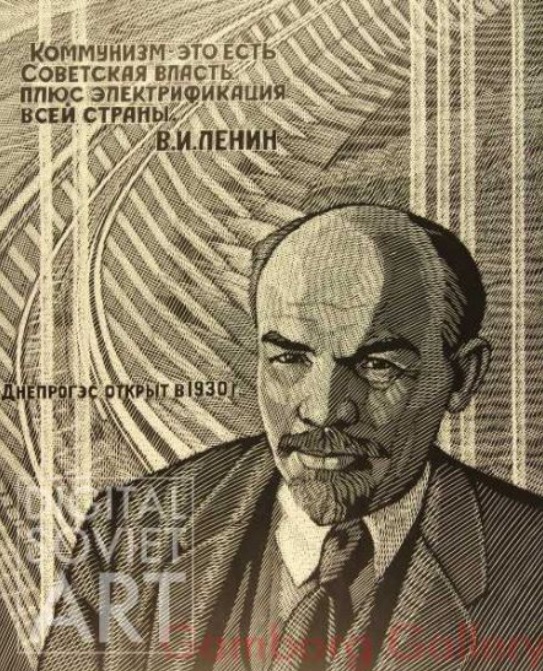
That line of thinking had clear roots in Lenin’s own formulations. His iconic slogan that “communism is Soviet power plus the electrification of the whole country” already summed up the idea that political power had to be fused with a comprehensive technological leap: without modern large-scale industry and advanced techniques, Soviet power alone could not become communism. In his more analytical writings, Lenin pushed this further, arguing that labour productivity was “in the last analysis” the decisive criterion for the victory of the new social order and that capitalism would be defeated only if socialism created a much higher productivity of labour. Communism, in this view, meant voluntary, class-conscious and united workers employing the “last word” of science and capitalist technology within a new labour discipline and organisation of work. A just or democratic regime was therefore necessary but not sufficient; the superiority of socialism was expected to manifest itself ultimately in its ability to mobilise emancipated workers and advanced technology to surpass capitalism’s productive performance.
Early Bolshevik expectations about innovation rested not only on external support from an anticipated world revolution, but also on a strong internal faith in the creative capacities of emancipated labour. Lenin repeatedly argued that capitalist relations of production stifled workers’ initiative: there was little reason for a worker to “think, invent, and economise” when the main beneficiary of any intensification of labour was the capitalist. Once exploitation was abolished and workers became, at least in principle, collective masters of production, the “fountain” of popular ingenuity was expected to burst open. The first years of Soviet power did provide some evidence for this view: factory committees, local soviets and “subbotniks” generated a wave of experiments, improvised solutions and workers’ initiatives, such as the Stakhanovite movement based on the use of modern techniques, that seemed to confirm the belief that creative energy had been unshackled. What followed, however, was a progressive narrowing of this space under the pressures of subsequent re-centralisation under the administrative-command system, as the leadership prioritised political consolidation and reliable fulfilment of basic output targets over open-ended experimentation from below.
Outside a narrow set of strategic complexes (defence, aerospace, parts of nuclear and heavy industry), the Soviet innovation process remained fragmented, episodic and weakly diffused. A first, and classic, explanation comes from the socialist-calculation and information-theoretic critique, associated with von Mises and Hayek. In this view, the central problem is that planners lack the fine-grained, continuously updated information about relative scarcities and user preferences that market prices, in principle, convey. Without a system of profit-driven entry and exit, relative price shifts and bankruptcies, planners cannot reliably identify which product innovations, process upgrades or organizational changes are socially efficient; they can only guess and then impose. Hayek’s argument about the “use of knowledge in society” is often interpreted in this context as saying that large, complex innovation systems require decentralized discovery and feedback mechanisms that cannot be replicated by a hierarchy of ministries and planning bureaus.
Empirical accounts of Soviet enterprises translate this into a set of concrete mechanisms. Enterprise managers were evaluated primarily on fulfillment of gross output and assortment targets, not on multi-dimensional notions of quality, productivity or user satisfaction. The “plan race” and the phenomenon of storming at the end of the month or quarter rewarded safe reproduction of existing routines rather than risky experimentation: a failed innovation that disrupted deliveries threatened plan fulfilment and career prospects, whereas playing it safe by reproducing last year’s output profile was rational. The ratchet effect – the tendency of planners to use over-fulfilment as a basis for raising next year’s targets – further reduced incentives to reveal genuine efficiency gains. Under these conditions, as Kornai and others argued, the “shortage economy” produced chronic risk-aversion at the enterprise level: technical change was pursued cautiously, often only when guaranteed to be plan-neutral and backed by higher authorities. Some leading analysts therefore concluded that Soviet “planning” was largely a façade of bargained and massaged targets, based on “planning from the achieved” rather than real foresight, crippled by insoluble information bottlenecks and, by the 1980s, reduced to a statistical–econometric routine that could still launch big projects but no longer steer a complex, low-growth, technologically differentiated economy. Some analysts, therefore, questioned whether the system deserved to be called “planned” at all, Eugene Zaleski arguing, based on a detailed comparison of the gap between plans and outcomes, that the very term “planned economy” was illusory.
A second set of constraints stemmed from the rigidity and time structure of the planning process itself. Innovation projects had to be fitted into annual and five-year plans negotiated between ministries, branch administrations and enterprises. Any proposal that required temporary disruption of output, retooling, or a change in input composition had to run the gauntlet of approvals and could easily be blocked by higher bodies mindful of meeting aggregate targets. Safronov’s work (2025) on planning debates in the late 1950s and early 1960s illustrates how attempts to introduce more flexible, program-oriented planning or to coordinate joint innovation projects across sectors ran into institutional resistance within Gosplan and ministerial bureaucracies that were structurally defensive of their existing competences. Even when innovation campaigns were launched from above, they tended to take the form of short-lived drives that overloaded the system with additional obligations without relaxing the constraints embedded in the basic plan architecture.
Third, the incentive structure around innovation was fundamentally skewed. Inventors and “rationalizers” could receive bonuses, diplomas and sometimes wage increments, but the distribution of material rewards was narrow and often delayed, and the underlying property relations did not link successful innovation to sustained control over resources. At the enterprise level, managers bore the downside risk of disruption but captured little of the upside beyond marginal improvements in bonus funds or plan coefficients. In aggregate, the system rewarded stability, fulfilment and avoidance of visible failure more than experimentation. Alec Nove and others note that late Soviet authorities tried repeatedly to recalibrate this pattern – for instance, by introducing innovation-linked performance indicators or “socialist competition” around technical progress – but these remained layered on top of unreformed core incentives and therefore could not overcome them.
From the perspective of modern Schumpeterian growth theory, this amounts to a systematic suppression of what Aghion and Howitt theorise as “creative destruction.” In their model, long-run growth is driven by a sequence of quality-improving innovations in which new firms, products or processes displace incumbent ones; the prospect of temporarily earning innovation rents is what motivates R&D, and the destruction of obsolete capital and firms is not a pathology but the very mechanism of progress. In the Soviet case, however, neither component operated in a sustained way. On the “creation” side, the absence of secure, appropriable innovation rents at the enterprise level, combined with the informational and bureaucratic obstacles just described, blunted incentives to search for and implement new techniques. On the “destruction” side, the socialist social compact – full employment, protection from bankruptcy, and an egalitarian wage structure – made it politically and socially unacceptable to close loss-making enterprises, liquidate obsolete branches or allow large-scale reallocation of labour through open unemployment. The result was a system in which islands of high-level innovation could coexist with a stagnant, over-manned industrial base, because the mechanisms that in capitalism ruthlessly weed out unsuccessful firms and reallocate capital were not allowed to operate.
Finally, the sectoral structure of Soviet innovation further limited economy-wide diffusion. Strategic complexes such as the military–industrial sector, nuclear power and space exploration did achieve impressive technological feats, often at or near the global frontier. But these sectors were institutionally insulated, operated under special secrecy and priority regimes, and were weakly linked to civilian production chains, as a prominent Russian economic historian Belousov notes in his multi-volume Economic History of Russia in the 20th Century. Spillovers did occur, but they were neither automatic nor systematically organized, and they could not compensate for the structural obstacles to innovation in mass-consumption industries, services and everyday producer goods. The Soviet model could therefore deliver spectacular breakthroughs where political and military imperatives justified concentrated investment and tolerated downtime, while failing to generate the continuous, decentralized, and socially disruptive innovation pattern that both its liberal critics, from Mises and Hayek, and its modern Schumpeterian interpreters regard as the hallmark of an innovation-driven economy. In practice, official Soviet statistics show that average annual growth of labour productivity fell from about 7–8 per cent in the 1950s to barely above 3 per cent by 1976–80, while capital intensity rose, so that ever greater investment effort produced diminishing additions to output.
Yugoslavia’s experiment with “market socialism” did not escape similar constraints: worker self-management typically voted to channel almost all net income into wages while financing investment through increasingly costly bank credit, firms modernised with second-hand imported machinery and bought licences they lacked the capacity to upgrade, leaving the economy technologically dependent. When the global environment worsened, these structural weaknesses translated into falling demand, rising unemployment despite worker resistance, and surging inflation.
External constraints: constrained access to advanced technology and unstable semi-peripheral insertion
The internal limits of the Soviet innovation regime were compounded by the external conditions under which it operated. Early Bolshevik thinking underestimated how difficult it would be for a backward country to master advanced technologies in isolation from, and in antagonism to, the capitalist core. In the 1918–20 period Lenin could still imagine that Russian workers, supported by the more advanced European proletariat, would rapidly assimilate the “highest achievements” of Western science and technology and transplant them onto Soviet soil. In this perspective, the global spread of revolution would both dissolve capitalist monopolies on advanced techniques and create a cooperative framework for their transfer, easing the technological burden on Soviet development. The failure of revolution in the West and the consolidation of hostile capitalist cores meant that the USSR had to obtain advanced technologies through commercial and political deals with its rivals, under the constraints already described.
In practice, access to foreign technology remained both essential and highly constrained. From the 1920s to the 1970s the USSR repeatedly relied on turnkey transfers from Western firms: Ford and other companies built car and tractor plants in the early industrialisation drive; after 1945, entire German factories, sometimes with technical staff, were transplanted as reparations; in the 1960s and 1970s, major projects such as the Tolyatti automobile plant were based on Fiat designs and assistance, as extensively documented by Holliday (1979). As Safronov shows, this pattern was later complemented by large “resources for technology” packages – the “gas for pipes” deal with Italy and similar agreements with Japan, the FRG and US firms such as Occidental – in which exports of oil, gas, timber and fertilisers financed imports of equipment, precision machinery and consumer goods, turning the hydrocarbons sector into a key stabiliser of the late Soviet economy. These deals allowed the Soviet economy to leapfrog specific technological stages. Yet once the initial transfer was absorbed, the same structural problems that hampered domestic innovation reasserted themselves: without strong feedback from market demand, with rigid planning procedures and limited scope for “creative destruction,” plants built on imported designs tended to ossify, and the technological gap with the West reopened within a few years.
Moreover, Soviet access to advanced Western technologies and markets was never unconditional. Export control regimes such as CoCom and, in the US case, linkages between trade, credit and political concessions (for instance via the Jackson–Vanik amendment to the 1974 Trade Act, which tied most-favoured-nation treatment to emigration and other political conditions) placed persistent ceilings on the scope and stability of technology transfer. To obtain critical equipment or credits, the USSR often had to accept politically and financially costly terms, and deals could be disrupted by shifts in Western policy, as occurred when Jackson–Vanik derailed the 1972 US–Soviet trade agreement. This environment made long-term planning of technology imports difficult and reinforced the tendency to treat them as episodic fixes rather than components of a coherent, open-ended innovation strategy.
At the same time, recent historiography emphasizes that the USSR was far from autarkic. Sanchez-Sibony’s notion of “red globalization” recasts Soviet foreign economic policy from Stalin to Khrushchev as a process of progressive integration into the global economy, particularly through energy exports and participation in emerging dollar-centred financial circuits. By the 1970s, as world-systems scholars and Marxist critics such as Amin and Kagarlitsky later argued, the Soviet Union and the Eastern European states had come to resemble a semi-peripheral bloc: heavily reliant on exports of energy and raw materials to the core, increasingly indebted, and importing capital goods and consumer technologies from Western firms. This pattern of insertion into the world economy made the USSR vulnerable to fluctuations in global energy prices and Western credit conditions, while reinforcing internal technological dependence.
From a dependency perspective, the problem was not that the USSR remained outside global capitalism, but that it slid into a subordinate, semi-peripheral position without developing the institutional mechanisms that allow dependent capitalist economies to stabilise and reproduce such a role. In a typical semi-peripheral capitalist setting, foreign ownership, private profit criteria and integration into global value chains provide a clear hierarchy of decision-making and a relatively coherent set of incentives for firms and states. In the Soviet case, by contrast, the party–state sought to preserve political control over accumulation while relying ever more on external markets and technologies. The result was a structurally unstable hybrid: externally, a quasi–commodity exporter and technology importer; internally, a bureaucratic, non-capitalist regime whose planning and incentive structures were ill-suited to managing a dependent insertion into the world economy. The contradictions of this position, once the extensive growth model was exhausted, further narrowed the space for a sustainable, system-wide innovation path.
Capitalist mechanisms of adjustment and dependent stability
If late Soviet socialism slid into an unstable semi-peripheral position without the institutional means to stabilise it, contemporary capitalism shows the opposite pattern. It is organised precisely to absorb technological underperformance in the periphery while preserving systemic stability. The same destructive elements that proved politically and ideologically intolerable in the socialist context – bankruptcy, unemployment, regional decline – are normalised under capitalism as routine mechanisms of adjustment and “creative destruction.”
In the canonical Schumpeterian and endogenous growth literature, such as Aghion and Howitt, capitalist innovation is driven by the expectation of temporary monopoly rents and disciplined by the threat of exit. Firms invest in new products and processes because successful innovation yields extra profits; at the same time, unsuccessful or obsolete firms are eliminated through bankruptcy, mergers or gradual decline, freeing resources for more profitable uses. Long-run growth is thus understood as a sequence of restructurings in which new sectors, technologies and regions periodically supersede older ones. Within this framework, the social costs of restructuring – layoffs, plant closures, declining regions – are not accidents but the price of maintaining a dynamic, innovation-friendly environment. Welfare states, labour-market policies and regional funds may partially cushion these shocks, but they do not remove the underlying logic: workers, communities and peripheral regions bear the adjustment costs, while the system as a whole is stabilised by the continuous reallocation of capital.
In dependent and semi-peripheral economies, this logic is overlaid by a specific international hierarchy. Integration into global value chains allows such countries to import advanced technologies and organizational forms without developing them domestically, as Amin (1976) and more recently Smith (2016) convincingly argued. Their supposed “comparative advantage” is defined as cheaper labour, resource endowments and a willingness to provide favourable conditions for foreign capital, in line with mainstream “comparative advantage–following” prescriptions for labour- and resource-abundant economies (promoted, among others, by the former World Bank Chief Economist Justin Yifu Lin), even though historical and heterodox accounts have long shown how such advice tends to lock peripheral countries into low-value positions by “kicking away the ladder” (Chang, 2002). Access to “crumbs from the table” of the core – in the form of assembly plants, supplier contracts, tourism or resource exports – can produce real, if limited, gains in employment and consumption, even when local innovation capacity remains weak.
Across the former state-socialist members of the EU, the story is one of partial income convergence without an innovation breakthrough. Studies of the CEE-11 (the post-socialist countries that joined the EU in/after 2004) show that their GDP per capita (PPP) rose from well under half of the EU-15 average in the early 1990s to around two-thirds to three-quarters by the mid-2010s, confirming significant but incomplete catching-up. Yet R&D and patent indicators remain heavily skewed toward the core: according to Eurostat, in 2023, five EU countries (Sweden, Belgium, Austria, Germany and Denmark) recorded R&D intensities above 3% of GDP, while the EU average stood at 2.2% and most Central and Eastern European members clustered well below that, with Romania at 0.5% and Bulgaria and Latvia at 0.8%. Patent data similarly show that the bulk of European patenting is concentrated in a narrow core of high-income economies, while post-socialist countries contribute modestly to overall filings and remain positioned in global value chains primarily as medium-tech and assembly locations rather than as major originators of generic technologies.
This configuration is underpinned by a class structure that is very different from the late Soviet one. A domestic bourgeoisie, tightly enmeshed with foreign capital and external institutions, has a strong interest in preserving the existing pattern of insertion into the world economy. Its political representatives are less concerned with elaborating a national development strategy than with guaranteeing “predictability” and “stability” for investors, maintaining macroeconomic orthodoxy, and negotiating access to markets in the core. Ideologically, the system makes no binding promise of a specific “bright future” beyond incremental improvement: the temporality is one of an extended present in which individuals are invited to “live here and now,” adjust to market signals, and treat crises as unfortunate but normal episodes in an otherwise natural order.
This pattern is particularly visible in smaller semi-peripheral economies such as Serbia, where post-2000 development has been explicitly framed around foreign direct investment. Successive governments have treated FDI inflows as a primary indicator of economic success, and policy discourse has equated “stability” with an accommodating environment for foreign investors. Tellingly, major opposition actors have largely internalised the same hierarchy of goals: declines in FDI are interpreted not as a symptom of a dependent growth model but simply as evidence of incumbent failure. Across government and opposition alike, elite consensus centres on attracting foreign capital rather than articulating a conflicted, autonomous development strategy.
Post-Soviet Russia has demonstrated the same pattern even more clearly: as Kagarlitsky (2025) argues, the new ruling elite has functioned as a dependent, intermediary bourgeoisie, integrating Russian capitalism into Western-centred circuits of accumulation without any serious project of autonomous development and contrary to the country’s development needs.
From this perspective, technological underperformance in the periphery is not a structural threat to capitalism’s stability. As long as the core continues to generate major innovations and organise global production networks, peripheral and semi-peripheral economies can remain technologically dependent without jeopardising the reproduction of the system. Their role is to supply labour, resources and mid-tech manufactures on terms that ensure satisfactory returns to capital. The costs of this dependence – deindustrialisation, blocked upgrading, recurrent employment shocks – are borne domestically, but they do not, in themselves, endanger the global regime.
The stabilising effect is, however, strictly conditional and asymmetric. Dependent stability is contingent on the continued expansion and relative health of the core. When the core “sneezes,” the periphery does not just catch a cold; it often experiences a full-blown fever. The 2008–09 financial crisis, originating in the US and Western European banking systems, produced disproportionately deep output contractions and employment losses in many semi-peripheral economies that had played little role in creating the bubble. Similarly, when demand for cars in Western Europe weakens or trade conflicts depress core automotive production, entire chains of suppliers in countries such as Serbia can face closures or drastic downsizing despite being technologically competent and cost-competitive by local standards. Dependent capitalism thus avoids the specific contradictions that paralysed late Soviet socialism – there is no need to reconcile a promise of historical superiority with structural subordination – but it does so by externalising vulnerability. Stability at the system level is maintained at the expense of heightened exposure and recurrent shocks in the periphery.
Is socialism inherently anti-innovation, or was the Soviet model an historical cul-de-sac?
The contrast between Soviet stagnation and the adaptive resilience of capitalism invites a blunt question: was the collapse of “really existing socialism” the result of an inherent incompatibility between socialism and innovation, or of the specific way the Soviet model was constructed and defended? Put differently, did the Soviet experience reveal a general truth about post-capitalist systems, or the limits of a particular configuration: nationally contained, one-party, bureaucratic planning with weak democratic control and hostile external conditions?
There is little in Marx’s own work to support the idea that socialism must be technologically conservative. On the contrary, Marx and Engels viewed capitalism’s historical “progressiveness” precisely in its unprecedented development of the productive forces, and expected socialism to appropriate and extend that dynamic on a new basis. Lenin’s formulations, cited earlier, are even more explicit: communism was defined as higher labour productivity than under capitalism, achieved by voluntary, class-conscious workers using the “last word” of science and technology. The problem, then, is not a socialist hostility to innovation in principle, but the institutional forms through which the Soviet project tried to realise this ambition.
Historical experience also shows that “real socialism” was far from incapable of generating innovation. The Soviet Union achieved globally recognised breakthroughs in nuclear energy and space technology, and maintained large research and development complexes that produced a steady stream of inventions. Beyond the emblematic cases, there were countless lesser-known innovations across industry, agriculture and services; Soviet institutions registered large numbers of patents every year, and many engineers and workers made careers as inventors within their sectors. To take just one mundane example, my own father held several patents in ferrous metallurgy and was awarded the title of “Honoured Inventor and Innovator.” The difficulty was not the absence of creative capacity or technical ingenuity, but the system’s limited ability to select, diffuse and embed these innovations economy-wide (as the official Perestroika agenda clearly recognised).
The Soviet trajectory showed that one particular set of institutions is very bad at sustaining innovation: a bureaucratic, hierarchical planning apparatus, insulated from democratic control and from most external feedback, attempting to manage a vast, differentiated economy under geopolitical siege. In that configuration, innovation was periodically mobilised through campaigns and priority sectors, but was not embedded as a continuous, decentralised process. Strategic complexes could reach or approach the global frontier, while large swathes of civilian production remained technologically stagnant. A popular Soviet joke captured this misalignment: a worker at a factory producing “peaceful” consumer goods supposedly smuggled parts home to assemble an electric iron, but however carefully he followed the instructions, the result always turned out to be an automatic rifle. The punchline exaggerates, but the underlying point is serious: the bias of the system, its incentive structure and coordination failures meant that innovative effort was repeatedly channelled into narrow, militarised or administratively privileged circuits, rather than into broad-based improvement of everyday production.
The failure tells us that a system of administrative command, soft budget constraints, suppressed “creative destruction” and structurally risk-averse enterprises is ill-suited to an innovation frontier. It does not, by itself, prove that any form of collective or social ownership must produce similar outcomes. Historical experiments with “market socialism” in Hungary and Yugoslavia, which hybridised planning with markets, confirm the point from another angle. Under the specific institutional and international constraints they faced, partial marketisation and enterprise autonomy did improve allocative efficiency and product quality in some sectors, but also created new disincentives: workers’ councils and managers often prioritised expanding the wage fund over long-term investment and R&D, financed modernisation through increasingly cheap credit, and remained technologically dependent on imported, second-hand or licensed equipment. As Brus and Laski argue in their From Marx to the Market, these arrangements generated new inequalities and vulnerabilities and opened channels for eventual capitalist restoration rather than consolidating a distinct, innovation-friendly socialist regime.
The post-Soviet debate about “the future of socialism” can be read as an extended attempt to answer this innovation question without surrendering the socialist horizon. Precisely because actually existing variants of market socialism proved fragile and innovation-poor, later proposals try to redesign their institutional core rather than simply revive Yugoslav or Hungarian formulas. One family of proposals centres on market socialism and regulated markets with collective ownership. Nove’s “feasible socialism” and Roemer’s market socialism envisage a landscape of publicly owned, cooperative or socialised firms operating in competitive markets but constrained by democratic regulation, social insurance and egalitarian ownership structures. In such schemes, markets are retained as information and innovation devices: prices, competition and entry/exit are used to identify and reward successful innovations, while public or social ownership is meant to prevent the emergence of a private capitalist class and to socialise the gains. Here, the lesson drawn from the Soviet experience is that suppressing market mechanisms destroys useful feedback and innovation incentives; the challenge is to harness these mechanisms without letting them regenerate full-blown capitalist relations.
A second family of proposals places its bets on democratic planning. Rather than abandoning planning as such, these approaches seek to rebuild it around transparent information flows, participatory decision-making and modern computational tools. Contemporary advocates of democratic economic planning argue that digital technologies, input–output models and participatory procedures can, in principle, coordinate complex production and innovation without relying on private profit as the universal signal (Carchedi and Roberts, 2023). In more radical visions of participatory economics, such as those of Albert and Hahnel (1991), detailed consumer and producer councils, iterative planning and collective deliberation replace both markets and bureaucratic command as the main coordination devices. From the standpoint of innovation, the promise is that decentralised, democratically structured planning could provide rich, multi-dimensional feedback and space for experimentation, while avoiding the social devastation associated with capitalist “creative destruction.” The unresolved question is whether such systems can generate sufficiently strong and continuous pressures for technological advance without defaulting either to bureaucratic inertia or to hidden market proxies.
A third current seeks to socialise wealth and control within largely capitalist frameworks, rather than designing a comprehensive “after capitalism” blueprint. Proposals such as Piketty’s universal capital endowments and social funds, or Varoufakis’s models of democratised corporate governance and shared capital control, aim to redistribute ownership of productive assets and decision-making power while leaving many market mechanisms intact. In a spirit similar to Wright’s “real utopias” framework, they explore symbiotic and interstitial transformations that expand democratic control without presupposing an immediate rupture with capitalist markets. In these scenarios, the innovation machinery of capitalism – corporate R&D, competition, venture capital, global value chains – continues to operate, but its outcomes are partially repurposed through collective ownership and democratic oversight. Innovation is not planned; it is tamed and redirected. Whether such arrangements amount to a transitional form of socialism, a reformed capitalism, or a new hybrid is precisely the subject of ongoing dispute, but analytically they show that one can imagine configurations where high innovation intensity coexists with substantially de-privatised wealth.
Across these otherwise divergent currents, two common threads are relevant to the question at hand. First, none accepts the Soviet experience as proof that socialism is inherently inimical to innovation. Instead, they treat it as a historically specific, path-dependent attempt to solve the problem of development and coordination under extreme conditions, whose institutional rigidities eventually choked the very dynamic it needed to survive. Second, all recognise, implicitly or explicitly, that any viable post-capitalist project must institutionalise some functional equivalent of the mechanisms that make capitalism innovative – decentralised initiative, strong feedback, the ability to reallocate resources from failing to successful activities – while preventing these mechanisms from reproducing the class power, commodification and instability that define capitalism itself.
Seen from this angle, innovation appears less as the proprietary asset of capitalism and more as a system-neutral coordination problem. Modern Schumpeterian growth theory, including Aghion and Howitt’s formalisation of “creative destruction,” identifies a set of abstract requirements for sustained, innovation-led growth: a disciplined process of selecting among competing projects; decentralised experimentation with truthful feedback and learning at the centre; and credible, time-bound rewards for successful innovation combined with broad diffusion of its benefits. In historical capitalism, influential institutionalist accounts have bundled these requirements with a familiar package of arrangements – strong private property, contract enforcement, deep private capital markets, and checks against arbitrary expropriation – and treated that bundle as the canonical route to innovation. But analytically, what matters are the underlying conditions, not the specifically capitalist way in which they have so far been realised. In principle, there is nothing in the Schumpeterian logic that prevents a non-capitalist order from generating comparable dynamism, provided it can engineer mechanisms of selection, feedback and reward that are compatible with collective or social ownership.
In that sense, the contrast drawn in the previous sections is not between a timelessly innovative capitalism and a timelessly stagnant socialism. It is between a historically adaptive capitalist world system that has found ways to stabilise innovation-driven restructuring, including through dependent integration of the periphery, and a particular model of state socialism that proved unable to reconcile its commitment to social guarantees and political monopoly with the institutional demands of sustained, economy-wide innovation. Whether future socialist experiments can do better is not a question that the Soviet collapse has already answered; it is one that remains open, and on which the viability of any alternative to capitalism ultimately depends.
One thought on “Can Socialism innovate? Soviet lessons and the dependent resilience of global capitalism”
Comments are closed.